Where we are, where we're headed, and how you can help.
FloatSwim launched in early 2026 with a mission to make water safety information and swim lesson access easier for every family. Here's what we've built so far and what's coming next.
Phase 1: Foundation (Complete)
The core site is live with educational content, a searchable directory, and real water safety resources for families.
Website launched
FloatSwim.org is live with a clean, accessible design built for parents and caregivers looking for water safety information.
Swim lesson directory
1,245+ providers across all 50 states. Searchable by location, free to use, and updated regularly.
Educational guides
Published guides on infant swim lessons, pool safety checklists, CPR training, swim goggles, swim caps, and water safety resources.
Story sharing
A consent-first story submission system where families can share water safety experiences to help other parents.
Water safety stats
Dashboard page with real CDC drowning statistics, directory metrics, and prevention data for families and advocates.
SEO & discoverability
Sitemap submitted, structured data implemented, and pages optimized so families can find these resources through search.
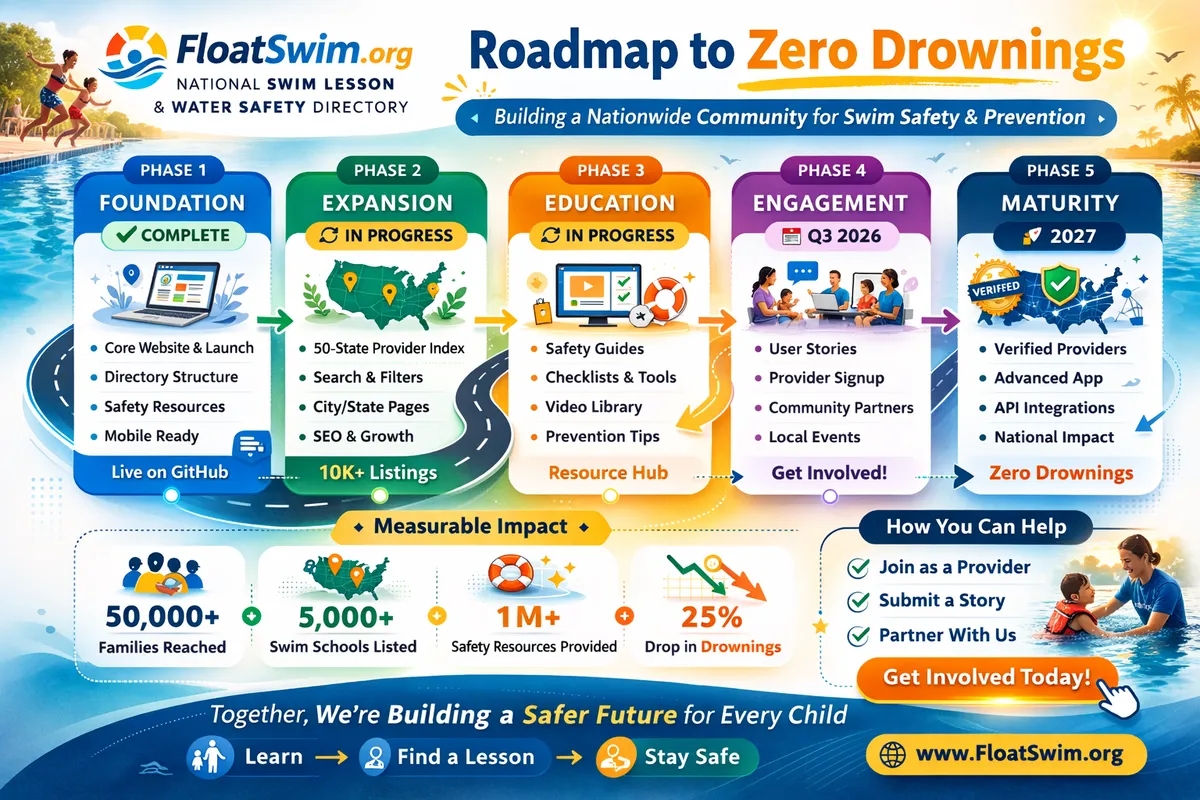
Phase 2: Growth & Community (In Progress)
Expanding the directory, deepening content, and building connections with families and organizations doing this work on the ground.
Expand directory coverage
Adding more providers in underserved areas. Goal: 2,500+ providers with better coverage in rural communities and areas with higher drowning rates.
Community stories
Publishing submitted family stories (with consent) to help other parents understand water safety risks and take action.
Provider profiles
Detailed pages for individual providers with program details, age groups, pricing, and parent reviews.
Email newsletter
Seasonal water safety tips, new directory additions, and community stories delivered to families who want to stay informed.
Spanish language support
Translating key pages and guides into Spanish to reach more families and reduce language barriers to water safety information.
Local partnerships
Connecting with YMCAs, parks departments, and community organizations to verify listings and promote free lesson programs.
Phase 3: Deeper Tools (Future)
Building tools that help communities organize around water safety, not just individuals.
Advocacy toolkits
Downloadable resources for schools, PTAs, and community leaders to promote swim lessons and pool safety in their neighborhoods.
Interactive safety map
A visual map showing swim lesson access gaps, drowning statistics by region, and where new programs are needed most.
Grant & funding guides
Resources to help communities apply for swim lesson funding, pool safety grants, and water safety education programs.
Get Involved
FloatSwim is built for families, by people who care about water safety. If you want to help shape what comes next, reach out.
- Parents & families: Tell us what information you wish you had sooner. Your experience helps us build better resources.
- Swim instructors & coaches: Help us verify directory listings in your area and suggest programs we may have missed.
- Organizations & nonprofits: Partner with us to promote free and reduced-cost swim lesson programs.
- Developers & designers: FloatSwim is open source. Contribute on GitHub or suggest improvements.